A Toxic Simmer
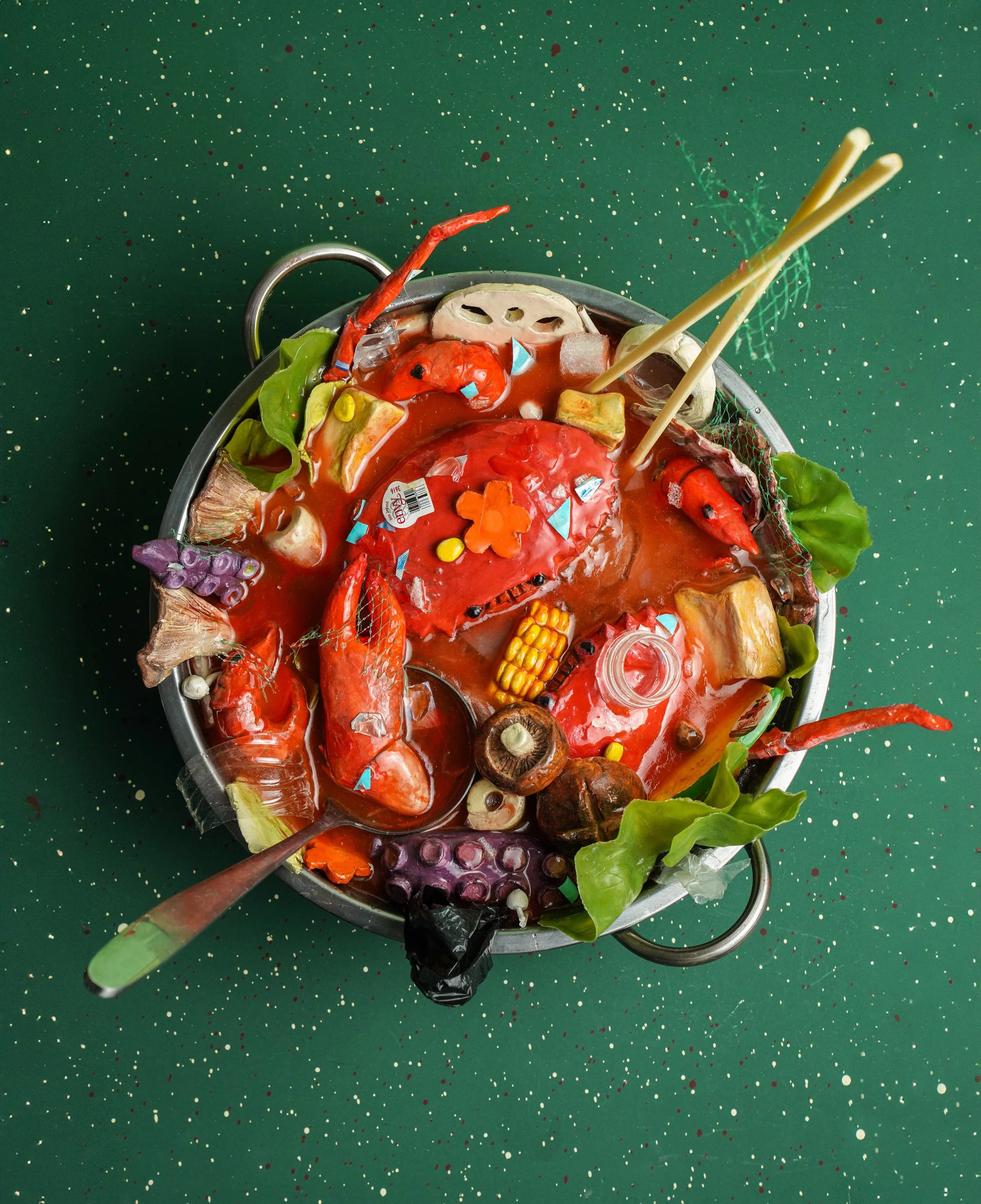
A Toxic Simmer, 2024, Ceramic & epoxy in metal pot, 12” x 12” x 12”
Last summer, when I visited Boston’s Chinatown, being served individual hotpots with separate plates of meat and vegetable toppings surprised me since I usually enjoy one big hotpot serving many. Collectivist and Individualistic cultures are topics I learned in my AP Psychology class, and I still ponder upon today. This newfound interest in my collectivist worldview allowed me to appreciate and be grateful for my family dinners.
Unfortunately, despite Indonesia being a tropical country, many families shy away from eating seafood and from going to the beach. Many sea creatures consume microplastics, and as a result, when humans consume them, they do so without knowing they are also eating plastic. Beaches are contaminated with trash, making it challenging to walk barefoot. “Given the widespread presence of MPs in marine life and the potential health risks associated with consuming contaminated seafood, it is particularly concerning that Indonesia has been named the world's second-largest contributor to mismanaged plastic waste in the marine environment [...]” (Hanatoro). This sparked inspiration for this work, in which I express my collectivist worldview through my views on environmental issues prevalent in Indonesia.
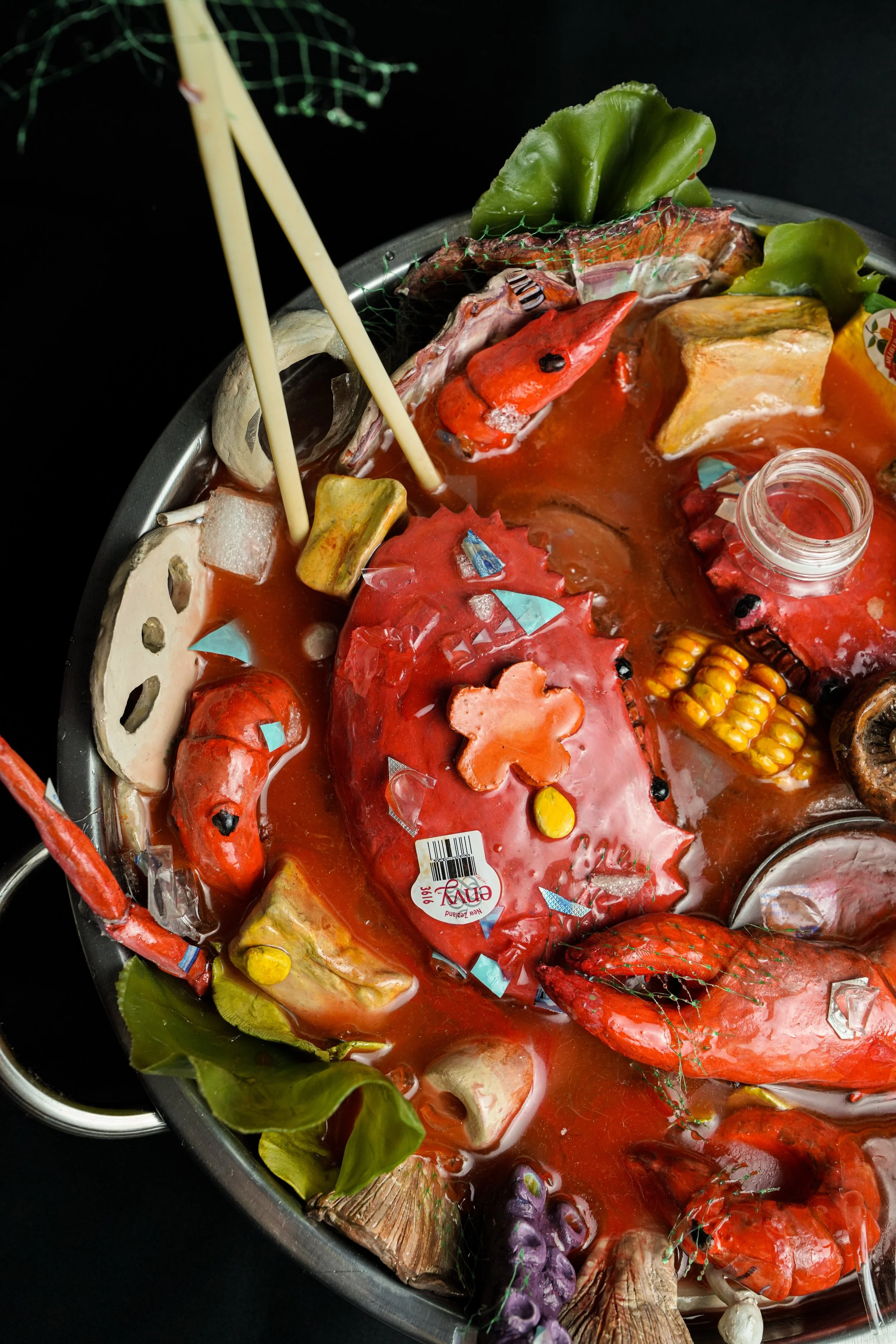
This 3D hotpot piece is created with aluminum foil, clay, epoxy, trash, and such, to exaggerate and simulate eating microplastics in a delicious hotpot meal. Incorporating a real pot, ladle, and chopsticks, I wanted to reiterate the importance of recycling and repurposing broken or unused objects. Something that cannot be seen is usually ignored–many don’t see the detrimental effects microplastics have on one’s health. This concerned me, and I wanted to bring this issue to light.
References:
Hantoro, I., Löhr, A. J., Van Belleghem, F. G. A. J., Widianarko, B., & Ragas, A. M. J. (2024). Characteristics of microplastics pollution in important commercial coastal seafood of Central Java, Indonesia. Environmental Advances, 17, 100574. https://doi.org/10.1016/j.envadv.2024.100574
